
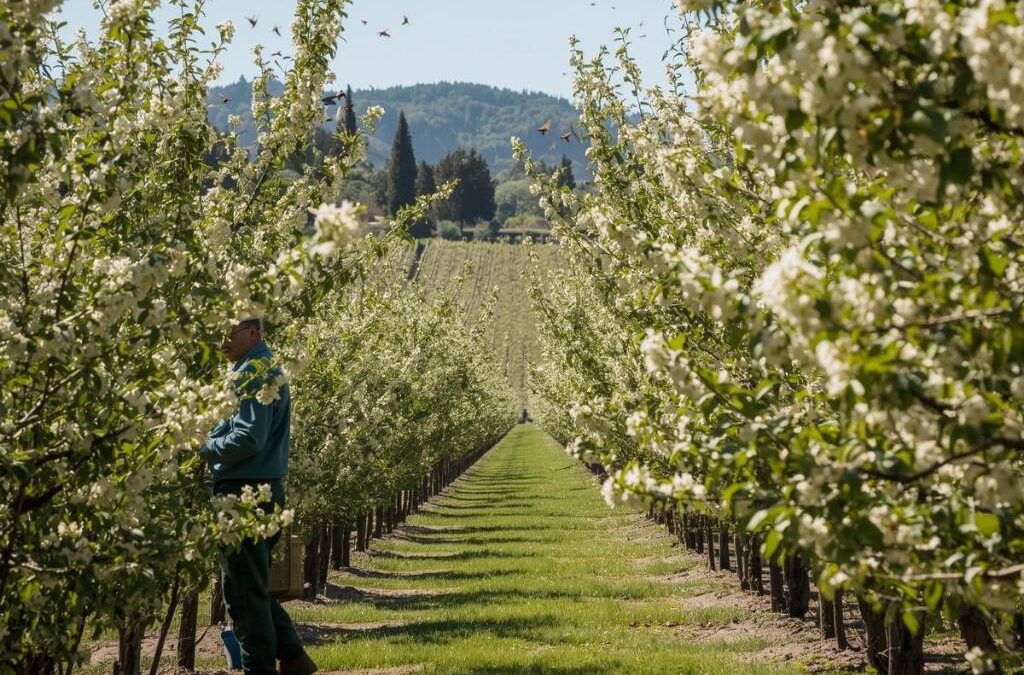
Grow Organic Pistachios with Organic Fertilizer
Grow Organic Pistachio Trees
Today I am going to give you some practical information on growing organically with liquid fertilizer. But first, let’s get a little background on the crop in question. The pistachio is a deeply-rooted alternate-year bearing nut tree native to Western Asia and Asia Minor. It may have been cultivated in Turkey as early as 7000 B.C., and the Mediterranean by the first century A.D.
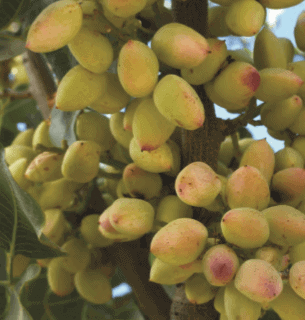
Pistachio Growing Conditions
It is the most sodium tolerant tree crop, after date palms. Growers can expect a small crop in 5-6 years, with full nut production occurring when the trees are 10-12 years old. Pistachio kernel fill requires lots of water (55 gals/day) and adequate nitrogen (N), potassium (K) and boron (B) during fill. Adequate potassium improves nut quality because of enhanced nut-filling and an increased percentage of split nuts, a desirable attribute in pistachios. Annual nitrogen applications should be tailored to the individual orchard, based on leaf-tissue sampling, canopy condition and yield performance. Late nitrogen applications should be managed carefully to avoid promoting tender growth, especially in trees on an off year, which can result in frost damage. Nitrogen applications in April, June, and one in August, are generally recommended.
California Pistachio Growing
In the California central valley, the most likely micronutrients to be deficient are zinc (Zn), copper (Cu), and boron (B). Foliar sprays applied when the leaf canopy is expanding
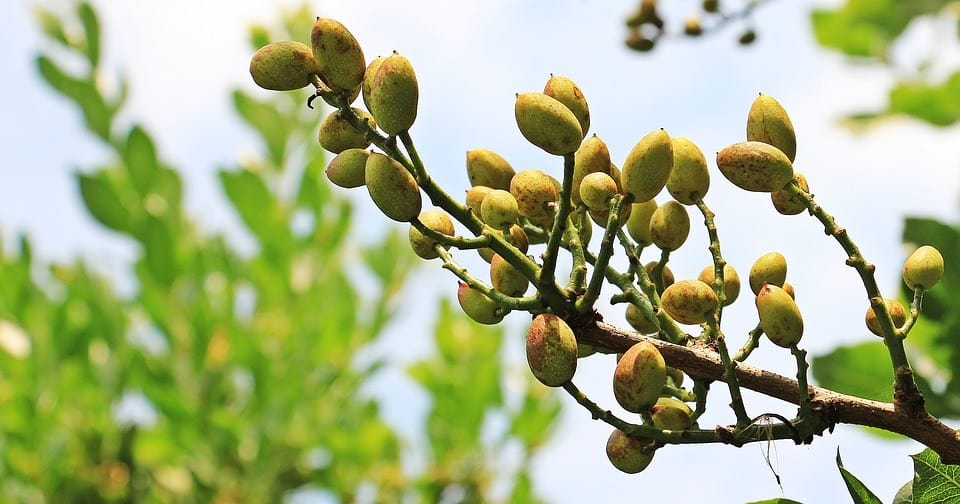
post-bloom in April and early May can help prevent deficiencies from occurring. September post-harvest foliar potassium applications can help supplement the tree potassium storage pool for next year’s crop. Zinc also can be applied post-harvest. Hamates can improve plant nutrient availability by chelating some essential soil elements. To check the fertility requirements of pistachio, a leaf tissue analysis should be taken on healthy midsummer (late July-mid-August) foliage to determine nitrogen, potassium, zinc, copper and boron requirements.
Dealing With Verticillium Wilt:
Verticillium wilt is a common fungal disease that affects many crops, including pistachio trees. It is caused by the soil-borne fungus Verticillium dahliae and can lead to significant yield losses if left untreated.
The first sign of verticillium wilt in pistachios is usually yellowing of the leaves, followed by wilting and eventually death of the tree. This occurs because the fungus clogs the water-conducting system of the tree, preventing proper nutrient and water uptake.
To prevent or manage verticillium wilt in your orchard, it is important to follow good cultural practices such as crop rotation, proper irrigation and drainage, and sanitation. Avoid planting susceptible crops in fields where verticillium wilt has been previously identified.
In addition, using a balanced fertilizer can help strengthen the tree’s immune system and make it more resistant to diseases like verticillium wilt. Look for fertilizers that contain essential micronutrients such as copper, zinc, and manganese which have been found to improve plant health and disease resistance.
It is also important to regularly monitor your trees for any signs of disease and promptly remove and destroy infected plants to prevent the spread of verticillium wilt. Pruning off affected branches can also help reduce the severity of the disease.
If you suspect that your pistachio trees are suffering from verticillium wilt, consult with a local agricultural extension office or a certified arborist for proper diagnosis and treatment.
Neptune’s Harvest Fertilizer Application Rates for Pistachios
Combine a half gallon per acre of Natural Kelp in 50-100 gallons of water post bloom in late April, again in early May, and again post-harvest in October. Foliar copper and zinc can be combined with these applications, if needed, use 1/2 gallon per acre All-Purpose Fertilizer in 100 gallons of water monthly from May to August, or 1 gallon per acre in May and August only.