
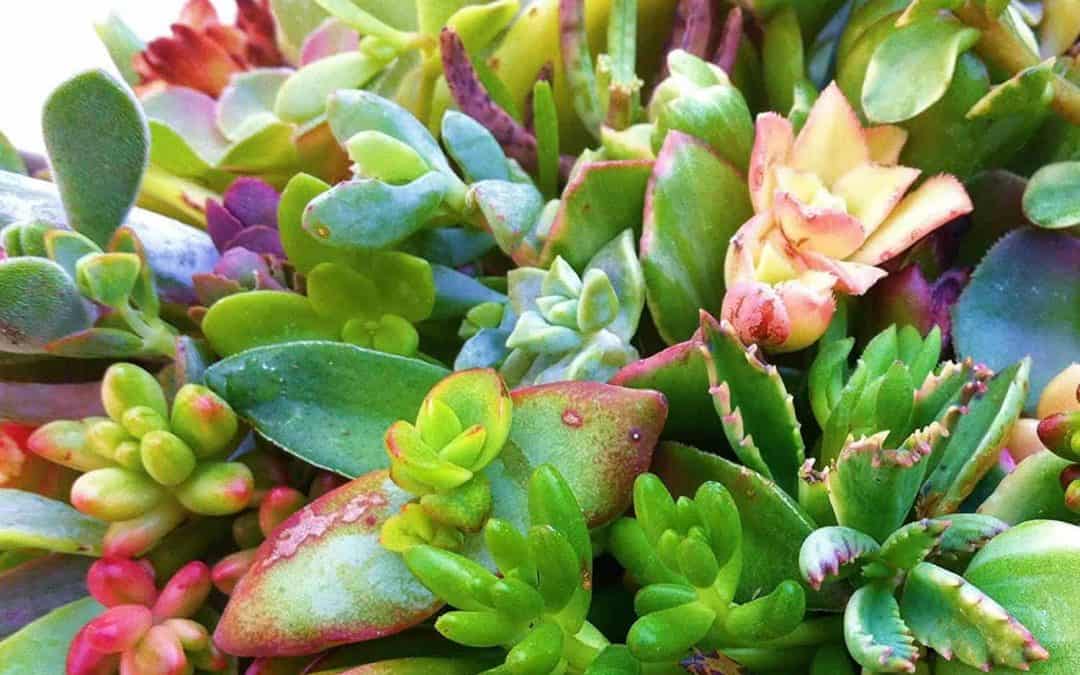
If you have a garden landscape, you most probably have succulent plants. These plants are interesting not only because of their physical appearance, but also because of the structure of their stems and leaves. So, seeing their leaves shriveled might make you feel saddened and worried at the same time. We can relate!
Let’s get to know some common reasons why the leaves of your succulent plants shriveled as well as a couple of things that you can do to save your plant.
Choosing the Wrong Soil for Succulents
The standard potting soil isn’t recommended for succulent plants as it is designed to hold on to moisture and is usually filled with a lot of fertilizer. Both of these aren’t good for your succulent. So if you’re using a standard potting soil, you need to replace it. Your nearby garden center should sell small bags of Cactus and Succulent mix. But if it isn’t available, find some sand and mix it with regular soil. This way, you will increase drainage and reduce fertilizer density.
Plant Pot Size
If you’ve been nurturing your plant for a while, there’s a good chance it’s starting to outgrow its current pot. When a plant becomes “root-bound,” its root system runs out of space to expand. This restriction means the roots can’t absorb enough water and nutrients to support new growth. Consequently, the plant is forced into a survival mode, often sacrificing older, healthy leaves to conserve resources and sustain the rest of itself. You might notice yellowing leaves at the base of the plant, which is a common sign that it’s time for a bigger home.
Watering and Overwatering
You might have already heard that overwatering can do more harm than good to your succulents, and it’s true. Giving your succulents too much water can create a damp environment that is a breeding ground for fungus or bacterial growth, ultimately leading to root rot.
Remember, succulents are desert plants, meaning they are adapted to arid conditions and need very little water to survive. To avoid over-watering, you should always check the soil before you even think about grabbing your watering can. The soil should be completely dry to the touch for at least a day or two before you water it again. If you spot any leaves that look mushy or rotten, remove them immediately to prevent the rot from spreading to healthier parts of the plant.
However, if the rot has already spread and reached the stem, the plant may be beyond saving in its current state. In this case, your best option is to carefully pull off any healthy leaves and use them to propagate a new, healthy plant. Overwatering your house plants can also attract pests like gnats, so it’s important to maintain a proper watering schedule to keep your succulents healthy.
An underwatered plant will often look sad and droopy. Its leaves might appear wilted and feel dry or crispy to the touch. You may also notice the soil pulling away from the sides of the pot, which is a clear sign that it’s too dry. If you see these symptoms, it’s time to give your plant a good drink. Increase your watering frequency, and when you do water, make sure to thoroughly saturate the soil until water runs out of the drainage holes at the bottom. While it’s important to quench its thirst, remember that it’s generally better to slightly underwater than to overwater, as excessive moisture can lead to root rot.
Inadequate Light Causing Etiolation of Lower Leaves
If the problem is not a watering issue, it may be that your plant just needs a little more sun each day. Succulents need plenty of light to thrive. If they aren’t receiving enough, a process called etiolation can occur, where the plant rapidly stretches taller to search for a better light source. This sudden growth spurt requires a lot of energy, causing the succulent to sacrifice its lower leaves to support the new growth. If you notice your succulent becoming leggy, with a long stem and dying leaves at the bottom, it’s a clear sign it needs more lighting.
Consider moving it to a brighter spot. However, you also need to protect it from getting too much direct sunlight, which can scorch its leaves. The ideal condition is dappled light, mimicking the filtered sun they would receive in their natural habitat. If that’s not possible, a spot with plenty of bright, indirect, or shaded light will also work well to keep your succulent healthy and compact.
Fertilize
Last but not least, your succulents might not be getting enough nutrients to support their growth. Unlike plants in the wild that get nutrients from decomposing organic matter, your potted succulents rely on you for their food. Over time, the soil’s nutrients get depleted. To keep them healthy and vibrant, consider feeding them with a balanced, succulent-specific fertilizer during their growing season, which is typically in the spring and summer. This will give them the much-needed boost to thrive.
Propagate
Did you know that succulents can be grown from cuttings easily? These “succulent pups” are like baby succulents for those who want to start their own collection or add to it without waiting for seeds to sprout! Propagating succulent pups is easy. They need the right medium to grow, a sunny spot (though they can also be propagated indoors or on a balcony), and water 2-3 times per week. All you have to do is take a cutting or roots of a healthy plant – preferably with leaves already growing on it – and trim off any flowers that are present so as not to interfere with propagation efforts. Then, simply set the cutting on a bed of soil and leave it to grow. Within a few weeks, you should see roots forming and new leaves sprouting.
In addition to propagating succulent pups, there are also other methods for propagating succulents such as leaf propagation and stem cuttings. Leaf propagation involves taking a leaf from an existing plant and placing it in soil until it grows roots and eventually forms a new plant. Stem cuttings involve removing a section of the succulent’s stem and planting it in soil until it takes root and grows into its own plant.
Related Post: The Best Succulent Soil Mix
For more details on what fertilizers to use, check out Fertilizers for LESS and shop around for good quality fertilizers are affordable prices!