
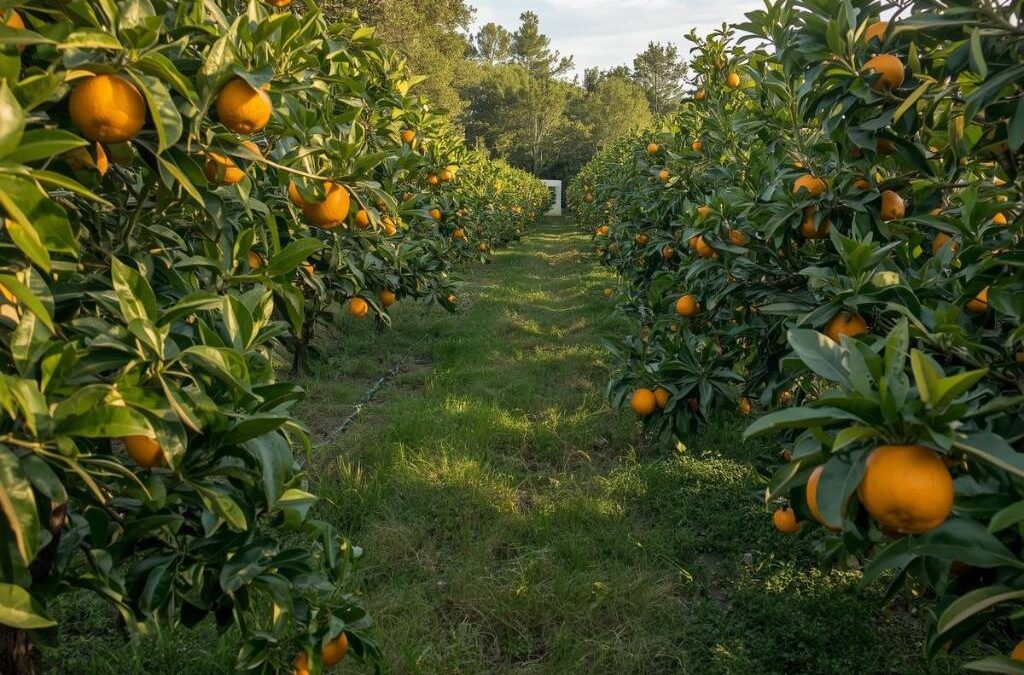
What Makes a Great Fertilizer for Citrus Trees?
One word: nitrogen! Citrus generally grows in climates with a lot of runoff. The constant erosion leaches nitrogen away quickly. So, citrus trees require supplementation of nitrogen. How much nitrogen? Well, it depends. So, with chemical fertilizers you need 1/4 to 1/2 a pound of nitrogen per tree annually. That’s a lot of nitrogen!
The Nutrients Citrus Plants Need Most
So much in fact, it will make you think twice about getting into the citrus business. Because to manage a large grove would take large amounts of expensive fertilizer. So, you have to wonder what the input cost would be per bushel. Are chemicals options really a practical fertilizer for citrus trees? And if they’re expensive, organic citrus fertilizer must be completely off the table, right? Maybe, but then again it depends on a few things you may not have considered yet…
The Organic Difference
With Organic Fertilizers things are different. With Organics you do a foliar spray instead of watering the soil. Did you know that foliar feeding can be 20 times more efficient? Amazing isn’t it? With Liquid Organic Fertilizers you only need 5-10% of that amount! Here’s what happens. Organic Fertilizers causes the soil to become alive. All that bacteria works to feed the plant. They help fix nitrogen from the atmosphere. That is why organics can be so much more efficient than chemical fertilizers. You still want to make sure and use an acid-based fertilizer for proper nutrition no matter which option you choose.
Citrus Fertilizer Application & Nitrogen Product Requirement
Use 2-4-1 to treat your citrus trees. A foliar spray is highly effective. Application of organic fertilizers can remedy some micronutrient deficiencies. It will also increase citrus crops’ tolerance of drought, heat and cold. When done as a part of the early bloom, summer and fall spray programs, foliar application is effective in limiting insect pest problems.
Foliar Application Guide
Mix a gallon of Neptune’s Harvest citrus fertilizer and 40 gallons of water. Apply as a fine mist. Use enough solution to thoroughly cover the leaves. Apply with pre-bloom, post-bloom and summer sprays. Boost results by adding in a quart of liquid kelp emulsion. You can increase the shelf-life of citrus fruit! Just apply a quart of kelp fertilizer and 25 gallons of water to one acre.
Timing is everything for your tree…
It works best one to two months before harvest. Application rates may vary according to soil fertility, cropping history and other inputs used. Lower dilution rates are often more effective than higher rates. A few lighter applications might work better than one heavy application. You should not exceed a three percent dilution rate.
What? You don’t Like the Foliar Spray?
Seriously? Why not? You want to apply organic fertilizer directly to the soil around your trees? Well, we do happen to have that information. However, we recommend doing a foliar spray unless it is not possible at your location. You just add up 2-3 gallons of all-purpose liquid organic fertilizer and 50-75 gallons of water. That should cover an acre. Apply this with irrigation at least two times a month. Do not exceed four feedings in a given month. Another option would be to just buy the spikes. Place tree fertilizer spikes around your citrus trees as directed by the manufacturer.
Site Selection & Soil Type
Do keep in mind that coarse soils produce the best yield. You should remember that when selecting your site. You want to minimize the need for fertilizer whenever possible. Work with natural systems to reduce your need for expensive inputs. Animals can be used to boost the fertility of your soil around a citrus tree. Cycling hogs or chickens through land can boost fertility. If you’re growing in your back yard though, that might not be an option for your citrus plants. In that case, check out our guide on DIY fertilizers you can make at home for free or on the cheap.
When Should I Fertilize Citrus Trees?
Knowing when to fertilize your citrus trees is crucial for their health, growth, and ability to produce juicy fruit. The ideal timing for fertilization isn’t a one-size-fits-all answer; it depends on several key factors, including the specific type of soil in your garden, your local climate, and the age and maturity of the tree itself.
Generally, the best time of the year to fertilize citrus trees is during their active growing season, which for most varieties spans from early spring through fall (typically March to October). During this vibrant period, the trees are busy producing new leaves, branches, and, most importantly, fruit. This flurry of activity requires a consistent and readily available supply of essential nutrients to support robust development and prevent deficiencies.
If you have sandy or coarse soil, it is recommended to fertilize your citrus trees more frequently. These types of soils tend to drain quickly and do not hold onto nutrients for long periods. As a result, frequent fertilization can help provide a continuous supply of nutrients for your trees.
Finally, remember to design your land in a way that minimizes erosion. Fast moving water will remove nitrogen from around your trees. Citrus are especially needy when it comes to nitrogen. Be sure to do everything possible to keep it from washing away!
The Last Word on Citrus Tree Care
So, now you know a little about fertilizer for citrus trees. We hope you have found this guide informative. Please feel free to contact us with any questions you might have. If you need help getting that setup, just e-mail info@fertilizerforless.com.