
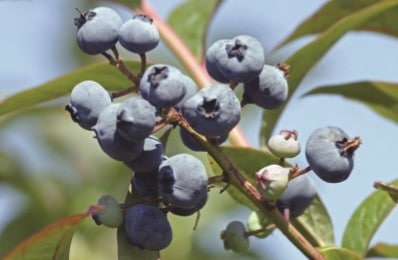
General Blueberry Plant Care
Blueberry Growing Conditions:
So, you want to grow blueberries? We’re here to help with this basic care guide and blueberry fertilizer guide. First, blueberries require full sun to partial shade. They should be planted into well drained soil in a sunny location. Although they are self-pollinating, you should plant at least two varieties. As a result, you can expect better yields and larger berries. Be sure to plant varieties that bloom around the same time.
Finally, one key consideration is soil pH. Because they thrive in acidic soils, you might have to amend before planting. You should have a 4.0 to 5.2 pH for most varieties. If not, don’t put up your shovel quite yet. There are several options for amending the soil to increase acidity. To begin, you can add pine needles, sawdust, or sphagnum peat moss to the soil before planting. If your soils are really alkaline, you might have to resort to sulfur powder. Before you do this, first consider this lesson learned:
Be Cautious Applying Sulfur!
Do not make the same mistake I made with my blueberries one year. I added sulfur to the soil expecting the pH to drop. When it didn’t drop, I added more. Three months later and all my blueberries were dead. So, I felt it was necessary to add this cautionary bit of advise to our blueberry fertilizer guide. That’s right. You see those nice blueberries on this page? Gone! There was so much acid that you could stick two wires in the ground to jump start your car!
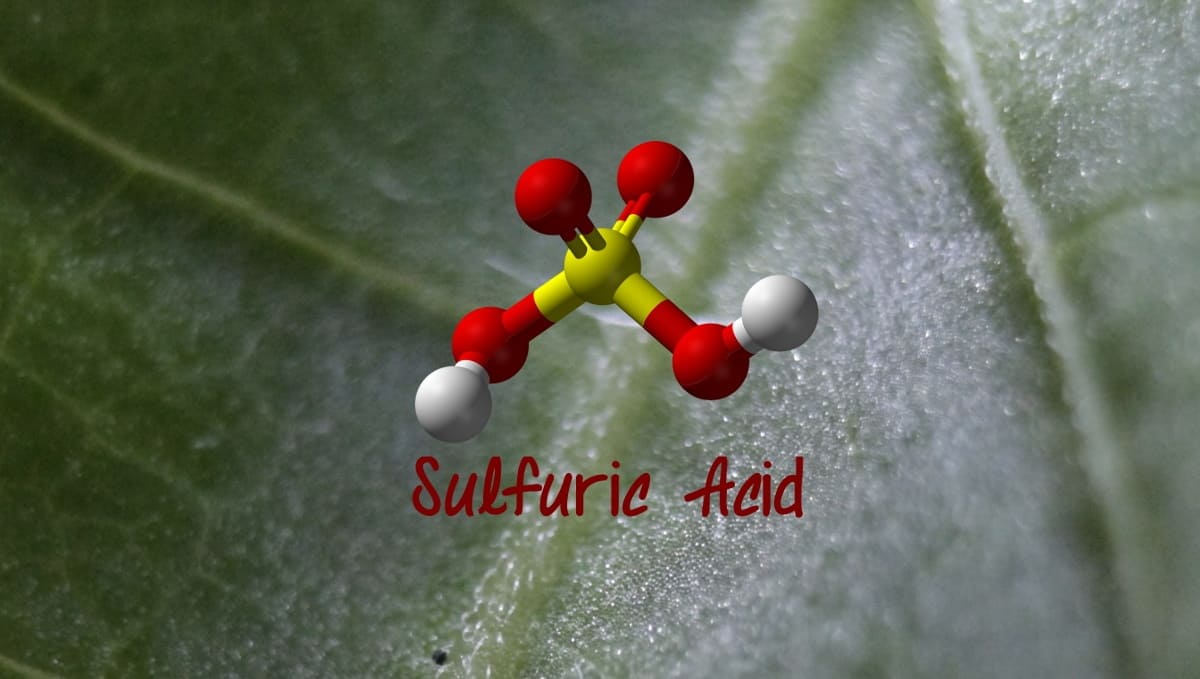
Lesson learned. Be cautious applying sulfur! There is actually a biological process required to lower pH with sulfur dust. Microorganisms convert the sulfur to sulfuric acid over time. This process can take weeks or even months to see full effects. So, planning is key. I highly recommend amending the soil two full seasons before planting. If you plant in the Spring, amend the preceding Fall. Alternatively, amend in early Spring and plant in the Fall.
Blueberry Fertilizer Guide
Now that you know the basics of blueberry plant care, it’s time to delve into the specifics of fertilizing. Before you even start searching for the perfect blueberry plant food, it’s crucial to understand the vital role of mulch. Mulch is more than just a topping; it actively improves the soil’s porosity and moisture retention, creating the ideal environment for the plant’s shallow, fibrous root system to thrive. Remember, blueberries are particular about their soil and will not tolerate heavy, clay-based, calcareous, or poorly-drained conditions.
When it comes to fertilizer, a balanced ratio is key. Look for formulations with a 1-1-1 or 1-2-1 N-P-K (Nitrogen-Phosphorus-Potassium) ratio, as these are best suited for blueberry cultivation. However, patience is a virtue. You should first establish a healthy layer of mulch around your plants and wait until one year after planting before applying any light fertilizer. This ensures the young plant isn’t overwhelmed and has time to establish itself properly in its new home.
If you are looking to go organic, we offer an excellent assortment of content on the subject in our blog.
Root Applications:
2 gallons Natural Fertilizer, one gallon of Natural Kelp, and 60 gallons of water. Now broadcast over plants at bud-swell. You can identify the right time for this by observing your blueberry plants; when the flower buds start to show a little green, it’s time for this application. Remember to water well before and after applying.
Foliar Application of Blueberry Fertilizer:
First, combine one gallon of Organic Liquid Kelp and 50 gallons of water. You should apply from bud-swell to fruit fill. Apply this to the leaves every three weeks. If leaves are yellow, add one gallon Natural Fertilizer and an additional 25 gallons of water. Blueberry plants prefer a slightly acidic soil, so make sure to test the pH regularly. If it’s too high, use granular sulfur or iron sulfate to lower it.
Post-Harvest Blueberry Fertilizer Guide:
First, combine 1 gallon of Natural Fertilizer, ½ gallon of Natural Liquid Kelp, and 50 gallons of water. Use one application in late summer. Rates vary according to soil fertility and other inputs. Lower concentrations applied more often can increase effectiveness. However, if other constraints allow only one trip over the field, do not exceed a 3 percent dilution rate. For example, 3 gallons liquid fertilizers to 97 gallons water would be 3%.
Soil Application of Blueberry Fertilizer:
Per-acre mix ratio: 2 gallons Liquid Natural Fertilizer and 50 gallons of water. You can apply in spring and fall if soil is hard and/or low in organic matter. Next, you might want to optimize your results. Do this by adding 1 gallon Natural Liquid Bonemeal, 1 quart Natural Kelp, and an extra 10 gallons of water.
That’s it! Now you know some basics of blueberry plant care. You also learned about blueberry fertilizer ratio’s, and application rates for our blueberry fertilizer. Feel free to contact us with any questions you might have about your plants. Also, don’t forget the lesson learned on sulfur! It might save you from having to replace dead plants. As always, feel free to visit our homepage to give your plants a needed nutrient boost. If you need further information, remember you can always contact your local extension for a thorough soil analysis.
If you like what you read, feel free to share! Just link back to us, and you can share all or a portion of this article.
Where Can I Buy Natural Fertilizer for Blueberry
Amazon is a right Place to Buy Online Organic Fertilizer for Blueberry Plant Care